


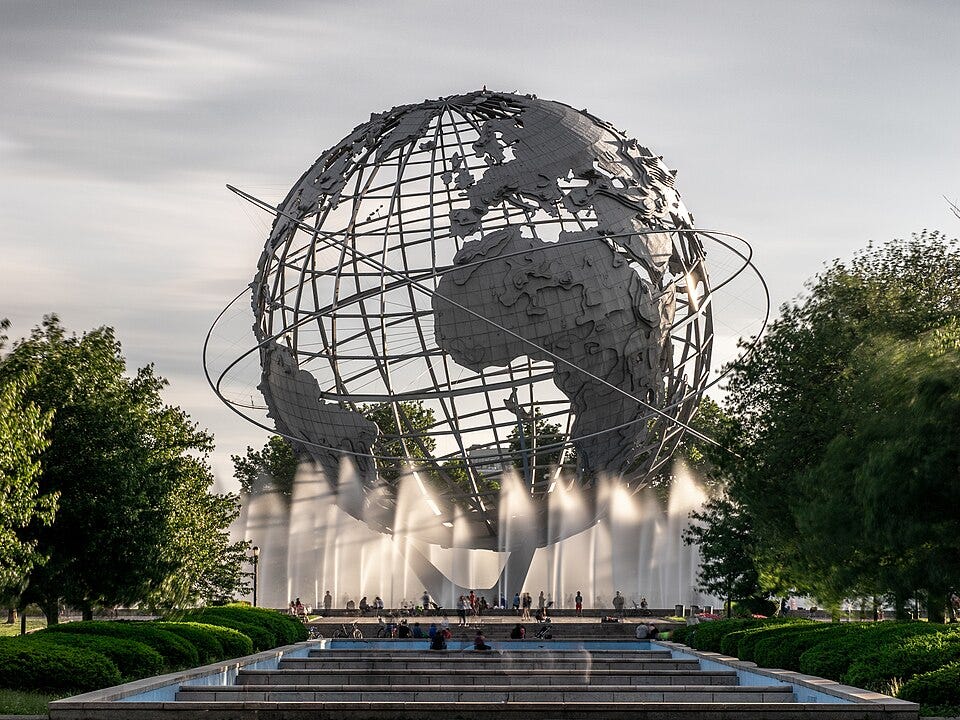
Those of us who love cartography and geography have rather unusual tastes. Although maps and globes have been with us for millennia1, the reality is that there aren’t many iconic monuments in which maps or globes are the main feature. When I think about it off the top of my head, only two places spring to mind: the Mapparium and the Unisphere.
.jpg)
Despite having been to New York a couple of times, I haven’t had the chance to visit this marvellous 43-metre-high metal structure located in Flushing Meadows-Corona Park in Queens, New York. Imagine being able to stroll around this globe occasionally, feeling the true immensity of the planet we inhabit.
These kinds of globes, as well as seeking to attract tourism and create iconic landmarks in a city, can also be used as monuments with a more propagandistic purpose. And this is precisely the story I want to tell you today: that of the intriguing Taliban monument in Dahan-e-Bagh Square in Kabul2.
The origins of the Taliban and their rise to power
Afghanistan is one of the many countries that were torn apart by the Cold War. In popular culture, thanks to films and current geopolitics, we tend to recall episodes linked to Korea, Vietnam, or Cuba. But there were many other countries that also suffered the direct consequences of the Cold War and the interests of the Soviet Union and the United States, such as Ethiopia, Chile, Nicaragua, Angola, and Afghanistan, the latter being the case that concerns us today.
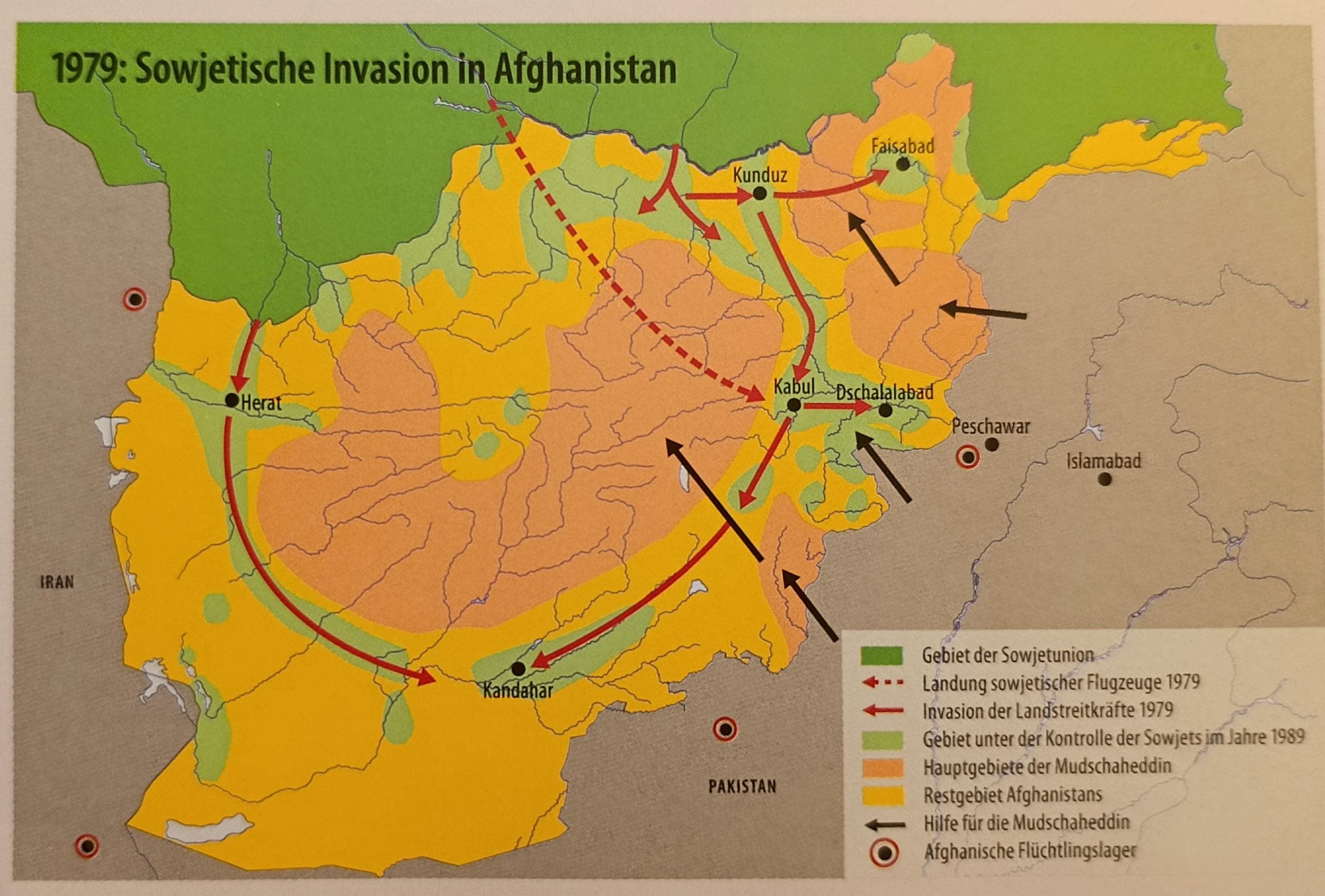
With the Islamic Revolution in Iran weakening the influence of the Communist Party, and faced with the possibility of the conflict spreading to Afghanistan, in December 1979 the Soviet Union decided to intervene to keep the Afghan Communist Party in power. The communist government had been in power for barely a year, and it was already facing strong resistance from the country’s religious establishment and rural areas, which perceived the proposed reforms as a threat.
Armed resistance to the new government persisted for over a decade, led by the mujahideen movements. These were Afghan Islamist groups fighting against the Soviet invasion, which received direct support from countries such as the United States, Saudi Arabia and Pakistan. The aid was not solely in the form of weaponry, but also included military training and strategic expertise.
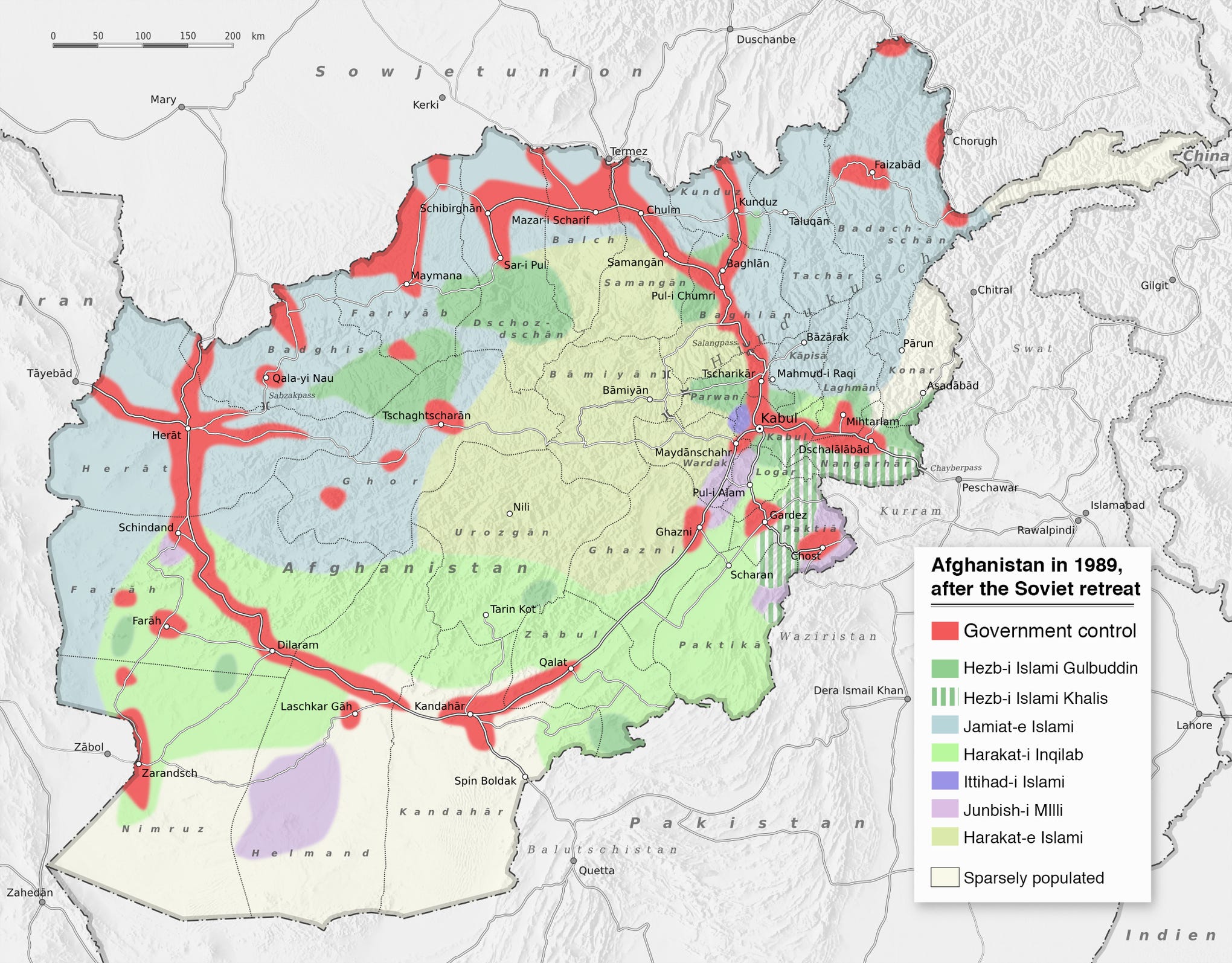
With the onset of the Soviet Union’s disintegration in 1989, support for the Afghan government was withdrawn, plunging the country into total chaos3. The first civil war pitted the communist government against multiple mujahideen groups, which fought without a clear organisation, at least during the early years. The continuing pressure led to the signing of the Peshawar Agreements in 1992, through which a mujahideen coalition seized power. But this did not mark the end of the conflict, as fighting continued in a second civil war. As a result of this second war, the Taliban took control of Kabul and most of the country in 1996.
The Taliban movement had emerged due to the chaos in which the country had been mired for over a decade. It was founded by madrasa students, which is precisely where it takes its name, Taliban. The movement’s main objective was to restore order in Afghanistan and re-establish security through the precepts of Islamic morality. This led them to fight many of the warlords who commanded certain mujahideen movements, although they also gained the support of many fighters who saw a more promising future in the Taliban4.
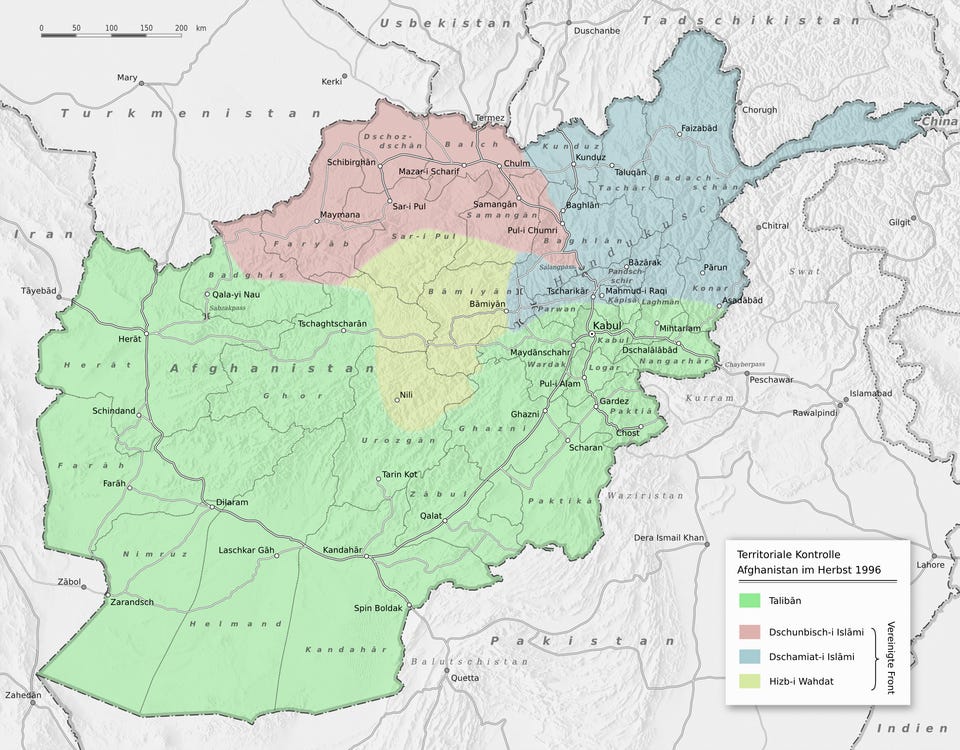

They managed to hold power in Afghanistan between 1996 and 2001, although they never fully controlled the country, as several insurgent groups remained active in the north-west. That said, their enforcement of sharia, Islamic law, was ruthless. To such an extent that when they carried out the destruction of the Buddhas of Bamiyan5, in 2001, it was all over the news in Western media.
The fall and resurgence of the Taliban
At the turn of the century, despite the attacks on world heritage sites and the iron-fisted control of the Afghan population, the reality was that no one questioned the legitimacy of the Afghan government. The Cold War had ended, Soviet interventionism had vanished, and US interventionism was at a minimum. But then came 11 September 2001 and everything changed.
The attack on the Twin Towers put Islamic terrorism on the map and created a new enemy to defend against. The United States identified Al-Qaeda as responsible and Osama bin Laden as its leader. This organisation was based in Afghanistan, so George W. Bush demanded that the Taliban cooperate with them and hand over bin Laden, a proposal the Taliban rejected unless evidence was provided to prove this was true.
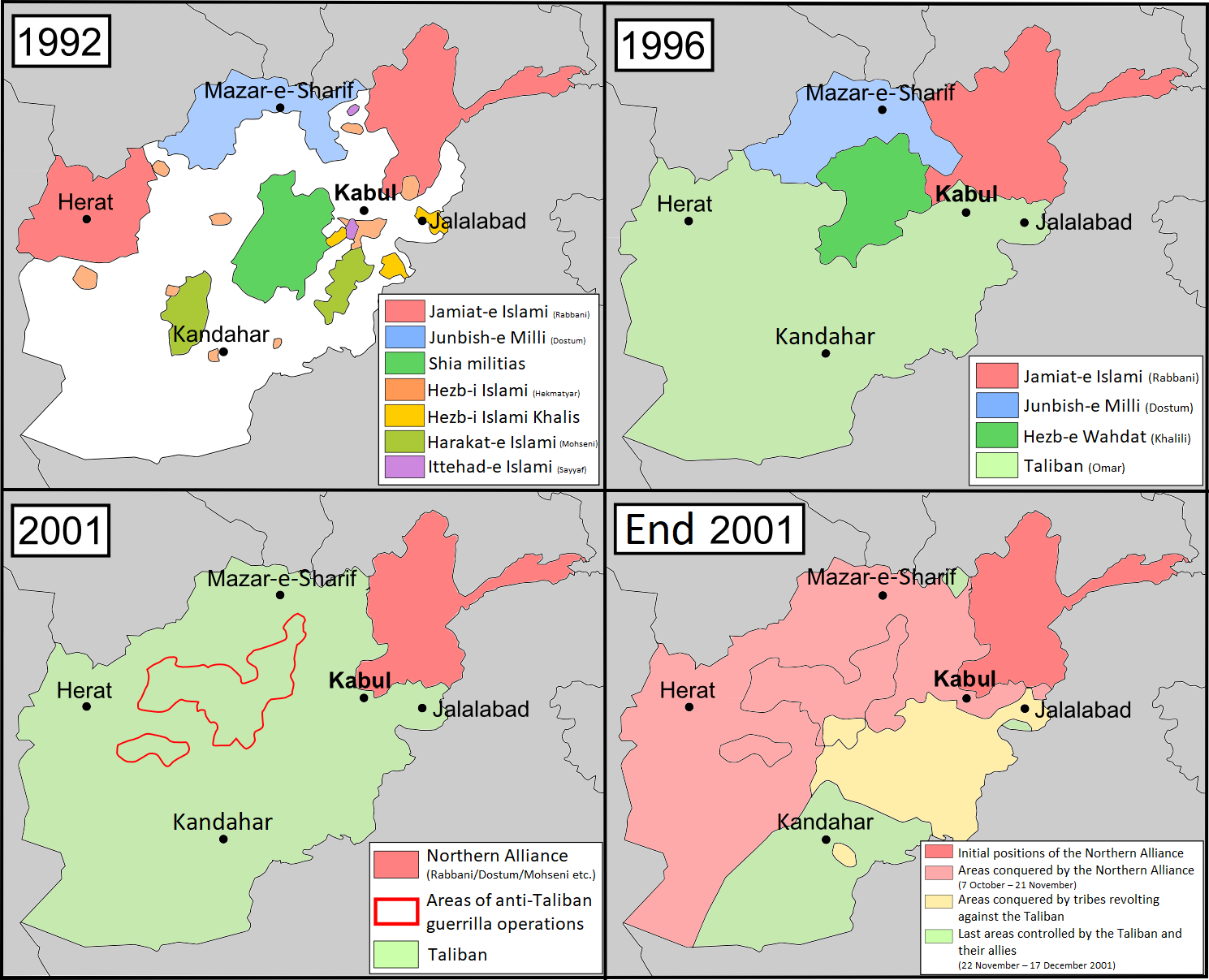

The United States declared war on terrorism6 and invoked, for the first and so far only time, Article 5 of NATO’s collective defence clause. This allowed an international coalition to be formed to invade Afghanistan and fight the Taliban. On 7 October, less than a month after 9/11, the United States bombed Taliban positions in Afghanistan for the first time. Furthermore, with the support of countries such as Pakistan and by collaborating with internal opposition forces that held the government, in just three months they had managed to reduce the Taliban’s control to Kandahar and rural regions in the south of the country.
A new Western-backed government was established, and many believed the Taliban had been defeated, but the reality was very different. From the rural areas where they had retreated, they launched a guerrilla war that would drag on for the next two decades. The US-imposed government suffered from immense institutional weakness and widespread corruption, which only served to generate ongoing discontent among Afghans, gradually strengthening the Taliban resistance.
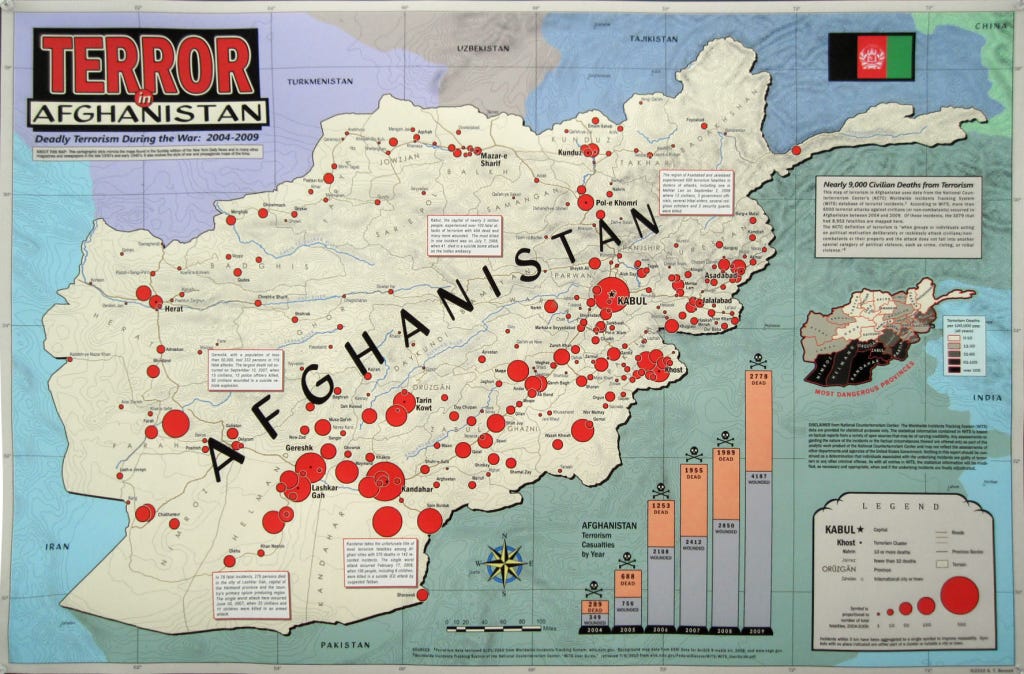
The war took a heavy toll on all NATO allies who actively participated, resulting in economic and human losses7. This led to a decline in support over the years. The Netherlands withdrew from Afghanistan in 2010 and Canada followed up two years later, despite both having played a significant role in the occupation. Other countries followed their footsteps by reducing their troop numbers, to the point where the situation became unsustainable. In 2020, the United States signed the Doha Agreements with the Taliban, and a year later, in August 2021, the United States was the last country to withdraw from Afghanistan.
Within days, the government that had received US support collapsed, and the Taliban moved in with hardly any resistance. After all, the US had already spent months failing to counter the Taliban advance, and the Taliban already controlled much of the country.
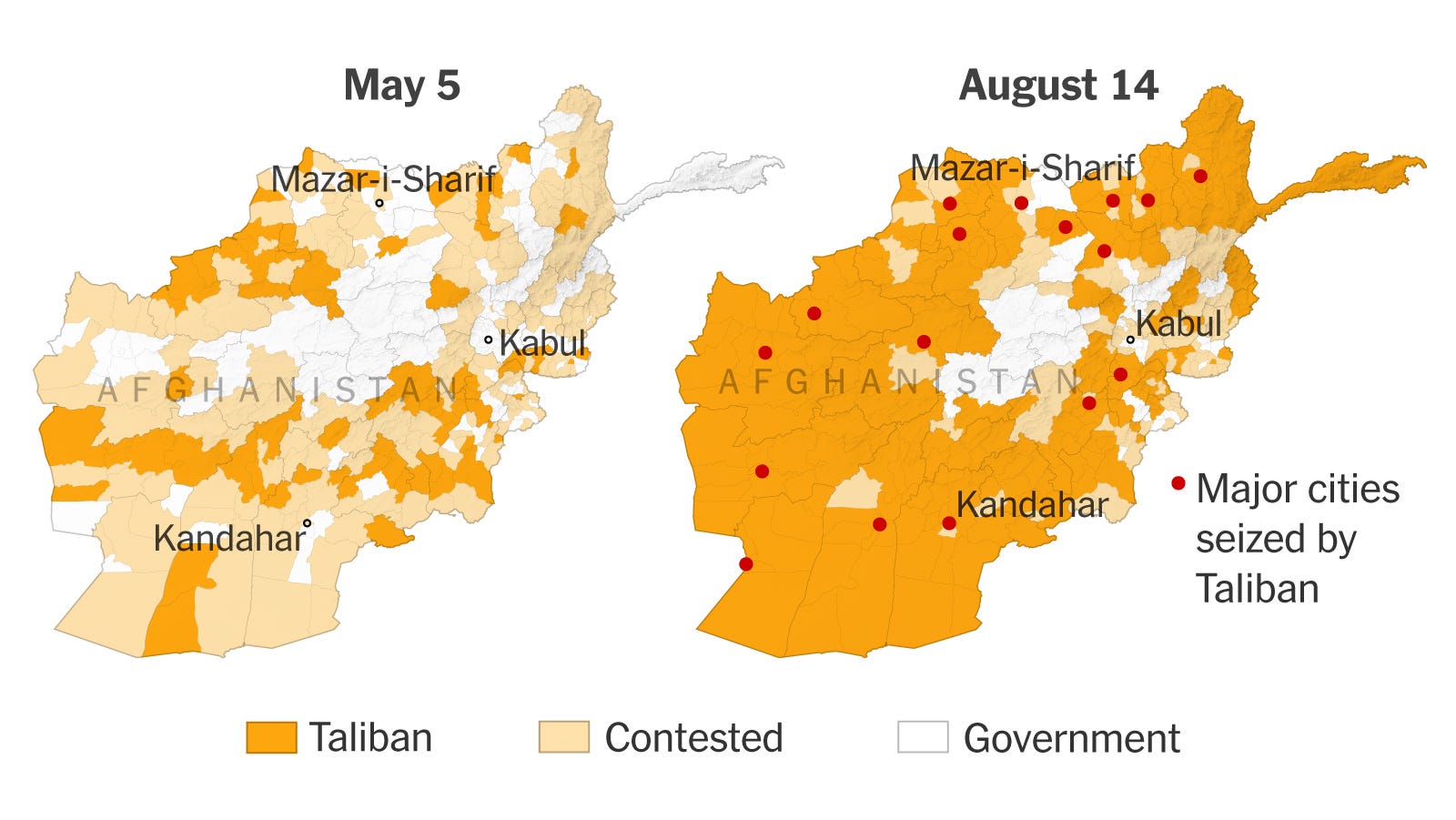
This brought an end to 20 years of international intervention, and the Taliban not only regained control but, for the first time, did so without any significant resistance. This was partly because they had managed to establish themselves as the only viable alternative to a foreign occupation whose interests were far removed from those of ordinary Afghans.
The Taliban’s makeover and a map of their worldview
Like any government seeking to win the people’s approval after years of instability, it is essential to keep up appearances. It should therefore come as no surprise that the Taliban issued multiple statements after returning to power, guaranteeing that this time it would be different. Among other things, they declared that they would establish a general amnesty and guarantee women’s rights within Islamic law. To no one’s surprise, their interpretation of Islamic law stripped women of virtually all their rights in barely a year.
Beyond mere words, this game of appearances also spilled onto the streets, following the well-worn principles of monumental propaganda that we have seen so often throughout history. In 2022, the mayor of Kabul, Mohammad Khaled Sajestani, announced a plan to adorn thirteen roundabouts with decorations that would bring a splash of colour to the city.
The first to be installed arrived in December 2022 at Dahan-e-Bagh Square. And this is the result: a complete fantasy.

It is an 8-metre-high globe, painted in colours to represent the political situation of the world. It must be admitted that this monument to cartography and geography, from the Taliban’s perspective, is not particularly remarkable, were it not for the crude and obvious intention to control the narrative that can be inferred from certain details, such as the representation of Afghanistan.
The country can be identified by the flag of the Islamic State of Afghanistan8, and its area on the map far exceeds the territory actually occupied by Afghanistan. To the east, it encroaches on more than half the territory of neighbouring Iran and, to the west, it extends well beyond the Durand Line and encompasses the entire Pashtun-populated territory of Pakistan. To the north, it also reclaims territory from the former Soviet republics of Central Asia, leaving the five9 confined to the territory occupied by Kazakhstan.
Esmatullah Habibi, the chief engineer behind the globe, stated after its installation that the sole intention was to give the country a certain prominence and to make it easier for citizens to identify Afghanistan and its location on the map. In response to remarks about the size of Afghanistan, the chief engineer and the mayor stated that there was no political agenda, and that any criticism was merely an attempt to undermine the city’s great development.
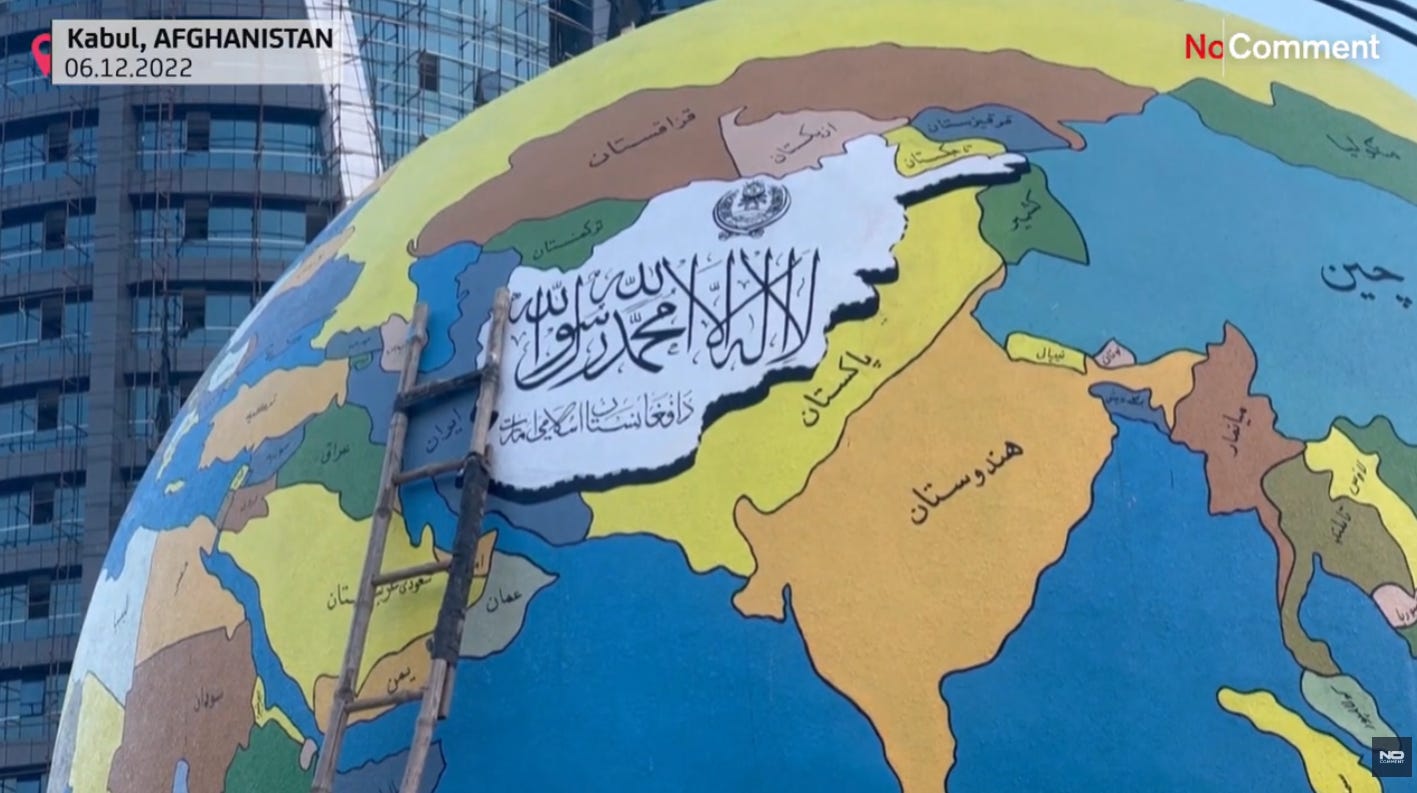
But perhaps the most curious thing is how this piece caused quite a stir in India, as the border demarcation grants independence to Kashmir, a territory disputed by Pakistan and India since 1947. If you look at the detail above, it corresponds to that green blob between Pakistan and China, where it also says ‘Kashmir’ in Pashto. The reality is that, at present, northern Kashmir is under Pakistani control and the rest is under Indian administration.
Out of curiosity, I’ve been searching but haven’t managed to find the decorations for any of the other 12 monuments that were supposed to have been installed at various roundabouts in Kabul, whether due to a lack of coverage or a lack of action. What I have found, however, is a short video in which you can see the final touches being made to the Dahan-e-Bagh globe before its inauguration.
The idea was for the globe to rotate about 12 times a minute, hence all the mechanism at the top. I haven’t been able to find any footage of the globe rotating10, either.
By popular demand, here’s a button for procrastinating, in case you have plenty of things to do, but you don’t feel like doing any of them. Each time you click on it, it will take you to a different map from the more than 1,200 in the catalogue.
If you like what you read, don’t hesitate to subscribe to receive an email with each new article that is published.
Literally tens of thousands of years, as I explained in this article on the earliest maps.
At least that will be the end of the story, as I’ve, as always, provided a bit of context that seemed relevant to me.
Many historians argue that the intervention in Afghanistan was, for the Soviet Union, the equivalent of the Vietnam War for the United States. It is true that this support was costly, but I do not consider it to have been one of the main causes of the Soviet Union’s collapse.
This detail is important for understanding the Taliban’s military capabilities. All the effort the United States put into training Afghans to fight the Soviets in the 1980s turned against the United States two decades later.
In case anyone has forgotten, or is too young, here is a photo of the destruction of the 55-metre Buddha and another of the 38-metre Buddha.


Better known as the war on terror.
More than 3,500 soldiers died over the 20 years, and another 20,000 suffered injuries of varying severity.
Black text on a white background.
Kazakhstan, Turkmenistan, Uzbekistan, Tajikistan, and Kyrgyzstan.
And there are videos of the globe, such as this one or this one, but in none of them does it rotate. And well, in case you want more, there is also this video of the construction of the globe itself.